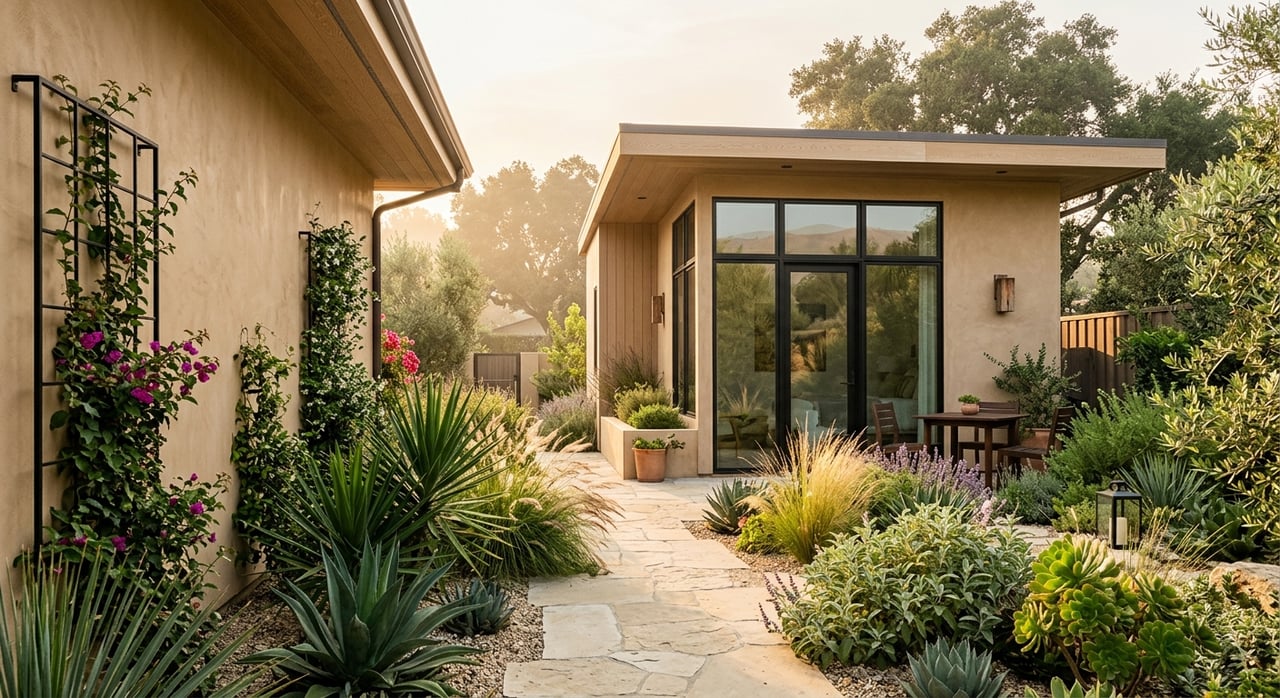
If you own a home in Westwood, you may be sitting on more flexibility than you realize. A guest house, backyard unit, garage conversion, or internal suite can create space for family, work, or future income, but in Westwood, the real question is not whether ADUs are broadly popular. It is whether your specific parcel can support one well. This guide will help you understand how ADU and guest house potential works in Westwood, what rules matter most, and how to think about the right setup for your property. Let’s dive in.
Why Westwood ADU Potential Is So Site-Specific
Westwood is not a one-note housing market. The Westwood Community Plan area includes Westwood, Westwood Village, North Westwood Village, and UCLA, with flatter land in the south and rolling hillside terrain in the north.
That mix matters because ADU potential is tied to the parcel, not the ZIP code alone. Single-family uses occupy a large share of residential acreage in the community plan area, but multifamily housing accounts for most housing units overall. In practical terms, the best ADU opportunities are usually found on individual single-family parcels where the lot layout, access, and zoning support a second unit.
If your home is in one of Westwood’s single-family pockets, you may have more options to explore. If your property sits near multifamily corridors or in an area with added planning overlays, the review may require a closer look at the site details before you make assumptions.
What Counts as an ADU in Los Angeles
In Los Angeles, an ADU is a self-contained housing unit on the same property as a single-family home, with a full kitchen and bathroom. The city allows ADUs and JADUs through ministerial review in zones that permit single-family or multifamily residential use, which means approval is based on objective standards rather than discretionary neighborhood hearings.
That distinction is important if you are thinking in terms like “guest house” or “bonus space.” A guest-house-style area is only an ADU if it functions as a full dwelling unit. If the space is smaller or built inside the main residence, it may fit better under the JADU category or another type of accessory space.
How a JADU Differs From an ADU
A JADU, or junior accessory dwelling unit, is the more compact option. In Los Angeles, it must be fully contained within a single-family residence, include separate exterior access, and it can have an efficiency kitchen instead of a full kitchen.
For some Westwood homeowners, that makes a JADU an appealing middle ground. It can support a guest suite, work-from-home setup, or multigenerational living arrangement without requiring a separate detached structure in the yard.
Parking can also be simpler with a JADU. Current city guidance states that no parking is required for a JADU, which can be especially relevant in a neighborhood where circulation and spillover parking already play a role in daily life.
Westwood Lot Conditions Matter Early
Before you think about finishes or floor plans, focus on the lot itself. Westwood’s street grid, driveway geometry, rear-yard circulation, and on-site parking layout can all affect how practical a second unit will be.
The Westwood Community Plan notes circulation and spillover parking issues from adjacent commercial areas. That does not mean an ADU is off the table, but it does mean access and parking strategy should be part of the conversation from the start.
On flatter parcels, detached rear units or converted accessory structures may be easier to visualize. On hillside parcels, additional design coordination may be needed because Los Angeles applies added standards in certain hillside neighborhoods.
Zoning and Overlays to Check First
Even when an ADU is allowed, your property still has to comply with local zoning and any applicable overlays. Los Angeles City Planning states that ADUs must conform to parcel-specific standards such as height, setbacks, lot coverage, floor area, building separation, and open space.
In Westwood, that review can be more layered because some parcels are affected by neighborhood-specific plans or overlays. These may include the Westwood Community Design Review Board, Westwood Community Multi-Family Specific Plan, Westwood Village Specific Plan, and the West Los Angeles Transportation Improvement and Mitigation Specific Plan.
That is why parcel-level verification matters so much here. Two homes that look similar on the surface may have very different development paths once zoning, overlays, and site constraints are reviewed.
The Best Westwood ADU Options
There is no single best ADU format for every Westwood property. The right choice usually depends on yard depth, existing structures, access, and how you want the space to function over time.
Detached ADU
A detached ADU can be a strong option if your lot has enough depth and open area for a separate structure. This setup may offer more privacy and a clearer separation between the main home and the second unit.
For homeowners who want a true independent living space, this can be the closest fit to the classic guest house idea. It may also create long-term flexibility if your needs shift later.
Garage or Accessory Structure Conversion
On tighter lots, converting an existing garage or accessory structure can make more sense. This approach can preserve more outdoor space while still creating a usable second unit.
In Westwood, where circulation and parking can already be sensitive issues, this option should be weighed carefully. A conversion may be attractive, but you will want to understand how it affects access and your overall parking plan.
JADU Inside the Main Home
If you want flexibility without adding a separate building, a JADU may be worth considering. Because it sits within the main residence, it can work well for a guest suite, extended family use, or a quieter office setup.
This option can be especially practical if your lot is constrained or if you want a lighter physical footprint. It also gives you the ability to create usable space while staying closely tied to the existing home.
Plan for Flexibility, Not Just Today
One of the smartest ways to approach an ADU in Westwood is to think beyond your immediate need. State housing guidance notes that ADUs and JADUs may eventually become rental housing, even if they begin as family space, guest space, or a home office.
That means your design choices should support more than one use where possible. Square footage, bedroom count, amenities, the age of the existing structure, and access to transportation can all shape how the space performs over time.
A flexible plan can help you avoid building a space that only works for one short chapter. If the unit can transition from guest use to work space to future rental use, you may get more long-term value from the same footprint.
Parking Questions in Westwood
Parking is one of the first concerns many Westwood homeowners raise, and for good reason. The neighborhood context makes it an everyday quality-of-life issue, especially near commercial activity and busier corridors.
The good news is that parking rules may be more flexible than many owners expect. Current Los Angeles guidance says JADUs do not require parking, and ADU parking may be waived in certain situations, including some conversions within an existing main home or accessory structure, with transit-based waivers also available.
Even so, a parking waiver is not the same as a good site plan. You will still want to think through driveway function, access, and how the property works in real life after the second unit is added.
Start With Parcel Research
If you are serious about exploring ADU or guest house potential in Westwood, start with parcel facts before you invest time in design ideas. Los Angeles City Planning identifies ZIMAS as the first stop for checking land use and zoning designations, planning application history, building permit history, and applicable overlays.
That initial review can tell you whether your property falls under added planning layers and what baseline development standards may apply. The city’s regulations summary can be helpful for quick reference, but it is only a starting point.
After zoning review, permit research should move to LADBS tools such as ePlanLA and PermitLA. For questions that go beyond a map lookup, City Planning public counters and the West Los Angeles Development Services Center are the next logical step.
Why Westwood Owners Benefit From a Tailored Strategy
In a market like Westwood, generic ADU advice often falls short. The neighborhood blends flat lots, hillside sites, single-family pockets, and denser multifamily corridors, so the best answer usually comes from a property-specific strategy.
If you are evaluating whether a second unit makes sense for your lifestyle, resale position, or long-term holding strategy, it helps to look at the home as a whole. Access, privacy, parking, yard use, future flexibility, and local planning conditions all deserve attention before you choose a path.
A thoughtful review can help you decide whether a detached ADU, conversion, or JADU fits your property best. And if you are buying, selling, or holding a Westwood home with ADU potential, that level of detail can shape smarter decisions from the start.
If you want a concierge-level perspective on how ADU potential may influence value, usability, and positioning in the Westside market, connect with Simon Mashian.
FAQs
What is the difference between an ADU and a guest house in Westwood?
- In Los Angeles, a space is considered an ADU if it is a self-contained housing unit with a full kitchen and bathroom on the same property as the main home. A guest-house-style space that does not meet those standards may fall under another category instead.
Can a Westwood homeowner build a JADU instead of a detached ADU?
- Yes. Los Angeles allows JADUs within a single-family residence, and they must have separate exterior access and may include an efficiency kitchen rather than a full kitchen.
Do Westwood ADUs always require parking?
- No. Current Los Angeles guidance says JADUs do not require parking, and ADU parking may be waived in certain cases, including some conversions and some transit-related situations.
Why is ADU potential in Westwood so property-specific?
- Westwood includes flat parcels, hillside lots, single-family pockets, multifamily corridors, and several planning overlays, so feasibility often depends on the individual parcel rather than the neighborhood name alone.
What should Westwood homeowners check before planning an ADU?
- Start with parcel-level zoning and overlay research in ZIMAS, then review permit pathways through LADBS tools such as ePlanLA and PermitLA if the property appears viable.
Can an ADU in Westwood be designed for more than one use?
- Yes. State housing guidance supports thinking about long-term flexibility, so many owners plan spaces that can shift between family use, guest use, office use, and possible future rental use.
